

Mini Australian Labradoodle Breeder in North Carolina: What Families Should Know
Families searching for a mini Australian Labradoodle breeder in North Carolina are often looking for more than just availability. They are seeking a companion with predictable temperament, manageable size, and a breeder committed to responsible, thoughtful practices. At Brown’s Labradoodles, our focus is on producing mini and micro-mini Australian Labradoodles through intentional pairing decisions, comprehensive health testing, and structured early socialization designed to support confident, family-ready companions.
Mini Australian Labradoodles offer the affectionate, intelligent nature of the breed in a smaller size that adapts well to a variety of living environments. Whether in a suburban home or a more compact setting, families appreciate their people-focused temperament and gentle disposition. However, size alone does not define quality. The long-term success of a companion dog depends heavily on the breeder’s philosophy, genetic planning, and early developmental approach.
As an Australian Labradoodle breeder located in North Carolina, our program emphasizes quality over quantity. Each litter is carefully planned with health-tested parents and raised in an environment designed to promote emotional stability and resilience. Early exposure, structured socialization, and intentional developmental experiences help prepare our puppies for smooth transitions into family life.
Families considering a mini Australian Labradoodle are encouraged to review our adoption process and current availability to better understand how our program operates. Thoughtful preparation and responsible placement remain central to everything we do.
Families searching for a mini Australian Labradoodle breeder in North Carolina are often looking for more than just availability. They are seeking a companion with predictable temperament, manageable size, and a breeder committed to responsible, thoughtful practices. At Brown’s Labradoodles, our focus is on producing mini and micro-mini Australian Labradoodles through intentional pairing decisions, comprehensive health testing, and structured early socialization designed to support confident, family-ready companions.
Mini Australian Labradoodles offer the affectionate, intelligent nature of the breed in a smaller size that adapts well to a variety of living environments. Whether in a suburban home or a more compact setting, families appreciate their people-focused temperament and gentle disposition. However, size alone does not define quality. The long-term success of a companion dog depends heavily on the breeder’s philosophy, genetic planning, and early developmental approach.
As an Australian Labradoodle breeder located in North Carolina, our program emphasizes quality over quantity. Each litter is carefully planned with health-tested parents and raised in an environment designed to promote emotional stability and resilience. Early exposure, structured socialization, and intentional developmental experiences help prepare our puppies for smooth transitions into family life.
Families considering a mini Australian Labradoodle are encouraged to review our adoption process and current availability to better understand how our program operates. Thoughtful preparation and responsible placement remain central to everything we do.

Micro Mini Australian Labradoodle Puppies in North Carolina: Size, Temperament, and What to Expect
Families searching for micro mini Australian Labradoodle puppies in North Carolina are often looking for a companion that combines a smaller size with the affectionate temperament and intelligence that define the breed. At Brown’s Labradoodles, our micro-mini breeding program focuses on producing compact companions through thoughtful pairing decisions, comprehensive health testing, and structured early socialization designed to support confident and emotionally balanced puppies.
Micro mini Australian Labradoodles are carefully bred to maintain the qualities families love while offering a more petite size. Achieving this balance requires intentional breeding practices that prioritize temperament stability, structural soundness, and long-term health. Smaller size alone is not the goal; instead, our focus remains on producing well-rounded companions capable of thriving in family environments.
Located in North Carolina, our program emphasizes quality over quantity, with limited planned litters designed to preserve the integrity of the breed. Each puppy is raised within a nurturing home environment where early exposure, gentle handling, and structured developmental experiences help build confidence and adaptability. These early foundations play an important role in shaping a puppy’s ability to transition smoothly into its new home.
Families searching for micro mini Australian Labradoodle puppies in North Carolina are often looking for a companion that combines a smaller size with the affectionate temperament and intelligence that define the breed. At Brown’s Labradoodles, our micro-mini breeding program focuses on producing compact companions through thoughtful pairing decisions, comprehensive health testing, and structured early socialization designed to support confident and emotionally balanced puppies.
Micro mini Australian Labradoodles are carefully bred to maintain the qualities families love while offering a more petite size. Achieving this balance requires intentional breeding practices that prioritize temperament stability, structural soundness, and long-term health. Smaller size alone is not the goal; instead, our focus remains on producing well-rounded companions capable of thriving in family environments.
Located in North Carolina, our program emphasizes quality over quantity, with limited planned litters designed to preserve the integrity of the breed. Each puppy is raised within a nurturing home environment where early exposure, gentle handling, and structured developmental experiences help build confidence and adaptability. These early foundations play an important role in shaping a puppy’s ability to transition smoothly into its new home.
Families interested in micro mini Australian Labradoodles are encouraged to learn more about our upcoming litters and adoption process. Because availability is intentionally limited, early planning often provides the best opportunity to welcome a puppy from this size category.
Are Australian Labradoodle Puppies Potty Trained? | North Carolina Breeder Guide
This is one of the most common questions families ask, and while it may seem like it should have a simple “yes” or “no” answer, the reality is a little more nuanced.
From a very young age, puppies naturally try to move away from their sleeping and eating areas to relieve themselves. This instinct is built into dogs; they naturally prefer to keep their living space clean. When this instinct is supported properly during early development, it creates a strong foundation for successful potty training later on.
Unfortunately, this natural behavior can sometimes be unintentionally disrupted. Extended time in confined spaces without appropriate opportunities to move away can cause puppies to lose that instinctual separation between living and bathroom areas. Once that habit changes, it can be more challenging to reestablish good patterns.
At Brown’s Labradoodles, we encourage and maintain this natural instinct. Beginning at around six weeks of age, our puppies learn to use a doggy door to access either an outdoor yard or a designated potty area. During nighttime hours, when outdoor access is limited, puppies are provided with a designated potty box. As a result, most elimination occurs in the appropriate location, and their living areas remain clean.
So, are Brown’s Labradoodles puppies potty trained when they go home?
In many ways, yes. Our puppies consistently keep their sleeping and living spaces clean and are accustomed to going away from their normal environment to relieve themselves. However, it is important to understand that transitioning into a new home is a significant change for any puppy.
When a puppy first arrives at a new home, accidents are normal and expected. The puppy has not yet learned where it lives, where it should go, or who you are. With patience and consistency, puppies quickly adapt and apply the habits they have already learned.
A simple routine helps make this transition smooth:
A simple routine helps make this transition smooth:
Limit unsupervised freedom initially so the puppy can learn its new environment.
Take the puppy outside regularly using a consistent cue word such as “potty.”
Wait calmly until the puppy eliminates before returning indoors.
Maintain frequent potty breaks, adjusting timing as the puppy grows and develops.
At Brown’s Labradoodles, our goal is to give every puppy a strong starting point. By preserving their natural instinct to keep their living space clean and providing early exposure to appropriate potty habits, most families find the transition into their home to be quick and manageable with consistent guidance.

Labradoodle Puppies for Sale in North Carolina: Finding the Right Breeder for Your Family
For families searching for Labradoodle puppies for sale in North Carolina, finding the right breeder is about more than availability — it’s about trust, responsible breeding practices, and a commitment to producing healthy, well-balanced companions. At Brown’s Labradoodles, our program is built on thoughtful planning, personalized care, and a dedication to raising Australian Labradoodles that thrive as lifelong family companions.
Below, we share what makes our approach unique and why many families choose Brown’s Labradoodles when searching for their next four-legged companion.
Ethical Breeding Practices and Intentional Care
Responsible breeding begins long before puppies are born. Each litter at Brown’s Labradoodles comes from carefully selected parent dogs chosen for temperament stability, health testing, structure, and overall compatibility. Our goal is to produce puppies that not only reflect the beauty of the breed but also demonstrate the emotional balance and adaptability families expect.
From birth, our puppies receive hands-on care within a nurturing environment designed to promote confidence and resilience. Regular veterinary oversight, structured early socialization, and gentle daily interaction help lay the foundation for a smooth transition into their future homes.
Temperament Matching and Individual Personality
Australian Labradoodles are widely known for their intelligence, adaptability, and affectionate personalities. However, each puppy has its own unique temperament, and matching that personality with the right family is an essential part of responsible placement.
Whether a family is looking for an energetic companion suited for an active lifestyle or a calm, gentle presence for a more relaxed home, we work closely with prospective owners to understand their needs and guide them toward the best possible match.
Health Standards and Ongoing Support
Every Brown’s Labradoodles puppy receives thorough veterinary evaluation, appropriate preventative care, and up-to-date vaccinations before going home. Our health guarantee reflects our commitment to responsible breeding and gives families peace of mind as they welcome their new companion.
Support does not end when a puppy leaves our home. We remain available as a resource for guidance on training, socialization, and general care, helping families feel confident throughout each stage of their dog’s development.
A Lifelong Relationship with Our Puppy Families
At Brown’s Labradoodles, we value the relationships we build with each family. Watching our puppies grow into beloved companions is one of the most rewarding parts of our program, and we encourage ongoing communication and updates. Our goal is to remain a trusted partner throughout your Labradoodle’s life.
Discover Your Next Companion
Choosing the right breeder is an important step toward welcoming a healthy, well-adjusted Labradoodle into your home. If you are searching for Labradoodle puppies in North Carolina, we invite you to explore our available puppies, learn more about our adoption process, and connect with us to begin your journey.

Signs of a Healthy Labradoodle Puppy: A Guide from Brown’s Labradoodles
When searching for a Labradoodle puppy in North Carolina or beyond, one of the most important considerations is health. While personality and appearance often capture attention first, long-term well-being begins with recognizing the signs of a healthy, properly raised puppy.
At Brown’s Labradoodles, we believe families should feel confident in understanding what to look for when evaluating a Labradoodle puppy. Below are key indicators that signal strong development, proper care, and overall vitality.
Bright, Engaged Expression
A healthy Labradoodle puppy is alert and responsive. Their eyes should appear bright and clear, and they should show curiosity about their surroundings. Healthy puppies engage naturally with people and littermates, demonstrating confidence without excessive fear or withdrawal.
Curiosity and responsiveness are early indicators of strong neurological and emotional development.
Playful Energy and Balanced Activity
Labradoodle puppies are known for their affectionate and playful nature. Healthy puppies will have bursts of energy followed by appropriate periods of rest. They should move comfortably, explore their environment, and interact willingly.
Balanced energy — not hyperactivity or lethargy — is a strong sign of overall vitality.
Healthy Coat and Skin Condition
A well-raised Labradoodle puppy should have a soft, clean coat with a natural sheen. The skin underneath should be smooth and free from redness, irritation, excessive dryness, or flaking.
Coat and skin health often reflect proper nutrition, responsible breeding practices, and attentive daily care.
Clear Eyes and Clean Ears
Healthy puppies have bright eyes without discharge or redness. Ears should be clean and odor-free, with no signs of inflammation or excessive wax buildup.
These small details can reveal a great deal about a puppy’s general health and hygiene.
Strong Appetite and Proper Growth
A healthy Labradoodle puppy maintains a steady appetite and demonstrates consistent growth. They should eat eagerly, maintain a proportionate body condition, and produce normal, well-formed stools.
Steady growth and appropriate weight are signs of proper nutrition and sound development.
Clean Teeth and Healthy Oral Condition
Even at a young age, oral health matters. Teeth should appear clean and well-aligned, and breath should not carry a strong odor. Early dental health contributes to long-term wellness.
Smooth Movement and Structural Balance
Observe how the puppy walks and moves. A healthy Labradoodle should have a natural, balanced gait without limping, stiffness, or hesitation. Proper structure and movement are important indicators of thoughtful breeding and musculoskeletal health.
Documented Veterinary Care
Reputable breeders provide detailed health records, including vaccination schedules, deworming treatments, and routine veterinary evaluations. Transparency in health documentation demonstrates responsible breeding practices and commitment to long-term well-being.
At Brown’s Labradoodles, every puppy receives comprehensive veterinary oversight before joining their new family.
Choosing with Confidence
Selecting a healthy Labradoodle puppy is an important decision that impacts years of companionship. By understanding what to look for — from physical condition to temperament and veterinary documentation — families can make informed choices with confidence.
If you are exploring Labradoodle puppies in North Carolina, we invite you to learn more about our breeding program and available litters.

The Surprising Origins of Labradoodle Puppies: A Fascinating History
Labradoodles have become one of the most recognizable and beloved companion dogs in modern households. Known for their affectionate nature, intelligence, and allergy-friendly coats, they are often viewed simply as adorable family companions. But the origins of the Labradoodle tell a much more intentional and fascinating story.
Understanding where the breed began provides important insight into what makes a well-bred Labradoodle truly exceptional.
The Need for an Allergy-Friendly Assistance Dog
The Labradoodle’s story began in Australia in the late 1980s. Wally Conron, a breeder working with the Royal Guide Dogs Association of Australia, received a request from a visually impaired woman in Hawaii who needed a guide dog. The challenge was that her husband suffered from severe dog allergies.
Traditional guide dogs were not suitable for the household due to shedding and allergen concerns. Conron sought to create a dog that combined the trainability and temperament of a Labrador Retriever with the low-shedding coat qualities of a Poodle.
That thoughtful experiment led to the first intentional Labradoodle litter in 1989.
The “Original” Labradoodle
The early Labradoodle litters were bred specifically to serve as assistance dogs. The goal was not appearance or novelty, but functionality — combining intelligence, temperament stability, and allergy-conscious coat traits.
The initial success demonstrated that careful pairing could produce a dog capable of guiding the visually impaired while reducing allergen exposure. From there, interest in the Labradoodle expanded rapidly.
he Rise in Popularity
As word spread about the Labradoodle’s temperament and coat qualities, families began seeking them not only as service animals but also as companion dogs.
Over time, breeders refined the breed further, particularly in Australia, leading to what is now recognized as the Australian Labradoodle — a carefully developed line emphasizing:
Predictable temperament
Consistent coat types
Strong family companionship traits
The Labradoodle’s intelligence, adaptability, and people-focused personality contributed significantly to its growing popularity worldwide.
The Emergence of “Designer Dogs”
The Labradoodle is often credited with influencing the broader “designer dog” movement — intentional crossbreeding aimed at combining desirable traits from multiple breeds.
However, responsible Australian Labradoodle breeding today is far more structured than casual crossbreeding. Established programs focus on multi-generational development, health testing, temperament evaluation, and long-term breed consistency.
This distinction is important for families seeking predictability and long-term health in a companion dog.
The Role of Responsible Breeding Today
As the breed evolved, dedicated breeders focused on preserving and refining the Labradoodle’s defining qualities. Responsible programs prioritize:
Comprehensive health testing
Thoughtful parent selection
Early neurological and social development
Careful temperament matching
These advancements ensure that modern Australian Labradoodles maintain the integrity, intelligence, and stability that first made the breed successful.
At Brown’s Labradoodles, we continue that commitment by emphasizing structured development and careful planning within our North Carolina-based program.
A Legacy of Companionship
The Labradoodle’s origins reflect thoughtful innovation and purposeful breeding. What began as a solution for one family’s needs has grown into a beloved breed known for companionship, adaptability, and affection.
For families considering welcoming a Labradoodle into their home, understanding this history underscores the importance of selecting a breeder who honors the breed’s intentional beginnings.
If you would like to learn more about our available or upcoming litters, we invite you to explore:
👉 View Available Puppies
👉 Learn About Our Adoption Process
👉 Explore Pricing Information

How Well Do Labradoodles Get Along with Other Pets?
Welcoming a new puppy into your home is exciting, especially when adding a Labradoodle to an existing multi-pet household. One of the most common questions families ask is whether Labradoodles get along well with other animals.
Known for their gentle temperament, intelligence, and social nature, Labradoodles often adapt successfully to homes with other pets when introductions are handled thoughtfully and responsibly.
Below are helpful insights into how Labradoodles typically interact with different types of animals and how to support a smooth transition.
Labradoodles generally display a friendly and social personality that makes them receptive to forming relationships with other dogs. Early socialization and positive experiences play a significant role in shaping this behavior.
When introducing a Labradoodle puppy to another dog:
Choose a neutral environment for the first meeting when possible.
Keep interactions calm and supervised.
Allow short, positive sessions rather than long, overwhelming encounters.
Gradual introductions help build trust and reduce stress, encouraging a balanced and harmonious relationship.
Labradoodles and Cats
With patience and proper introductions, many Labradoodles adapt well to living alongside cats. Because puppies are naturally curious, controlled introductions are essential.
Helpful steps include:
Allow pets to become familiar with each other’s scent before meeting face-to-face.
Begin with short, supervised interactions.
Provide safe spaces where the cat can retreat if needed.
Over time, consistent exposure combined with positive reinforcement helps establish peaceful coexistence.
Labradoodles and Small Animals
Australian Labradoodles are often bred with temperament stability in mind and may exhibit lower prey drive compared to some breeds. However, supervision remains important when introducing rabbits, guinea pigs, birds, or other small animals.
Early training and clear boundaries help prevent chasing behaviors. Always ensure smaller pets have secure areas where they can rest without interruption.
Labradoodles and Exotic Pets
Exotic animals such as reptiles or specialty small pets require extra caution. Because their behaviors and needs differ significantly from dogs, introductions should be gradual and highly supervised.
Consulting a veterinarian or experienced animal behavior professional can help ensure safe interactions and appropriate environmental setup.
Setting Your Labradoodle Up for Success
While Labradoodles are widely known for their sociable and adaptable nature, successful integration into a multi-pet home depends on thoughtful introductions, consistent training, and realistic expectations.
At Brown’s Labradoodles, we focus on temperament-driven breeding and early socialization practices that help puppies develop confidence and positive interaction skills from a young age. These early foundations often make transitions into multi-pet households smoother for both the puppy and existing animals.
If you’re considering adding a Labradoodle to your family, we invite you to explore:
👉 View Available Puppies
👉 Learn About Our Adoption Process
👉 Explore Pricing Information
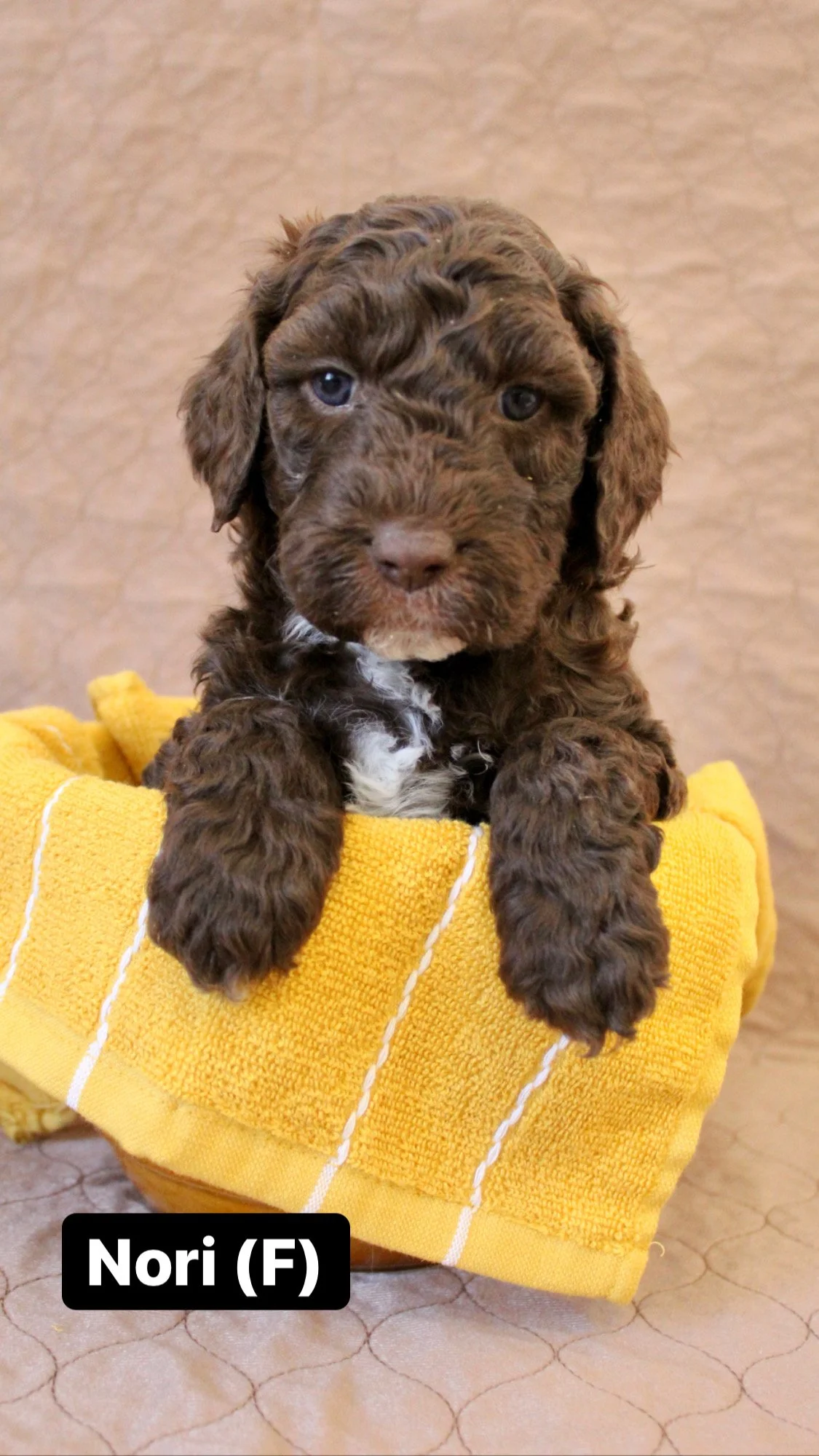
The “Risky” Side of Raising Puppies: Why Responsible Development Isn’t Always Perfect
Raising healthy, confident puppies is incredibly rewarding — but it’s also a messy, demanding, and sometimes risky job. Years ago, there was a television show called Dirty Jobs, where host Mike Rowe explored challenging professions that most people never see behind the scenes. Breeding and raising puppies may not always look glamorous either. Behind every happy, clean puppy that goes home with a new family is an enormous amount of effort, patience, and daily work.
When families bring their new puppy home, everything feels polished and perfect. But the reality of raising a litter is far different. Puppies explore the world with enthusiasm — they chew, dig, wrestle, make messes, and learn through constant interaction. Multiply that by an entire litter, and maintaining cleanliness and safety becomes an ongoing commitment.
Safety vs. Development: Finding the Right Balance
From a purely risk-avoidance standpoint, the safest environment for a puppy might be a sterile one — individual confinement, controlled surfaces, and minimal exposure to outside elements. Such an approach could reduce the chances of illness or injury.
However, responsible breeders understand that development matters just as much as protection.
Puppies need exposure to:
outdoor environments
different textures and surfaces
social interaction with littermates
normal exploration and play.
These experiences build resilience, confidence, and emotional stability. Without them, puppies may grow up physically protected but underdeveloped socially or behaviorally.
Understanding Health Risks in Growing Puppies
Allowing puppies to explore naturally does introduce some level of risk. Puppies may encounter common, treatable conditions such as coccidia or giardia during early development. While these names can sound alarming to new owners, they are often manageable and treatable when identified early and handled responsibly.
Responsible breeding is not about eliminating every possible exposure — which is impossible — but about managing risk thoughtfully while supporting healthy development.
Veterinary oversight, attentive monitoring, and prompt treatment protocols help ensure that puppies remain safe while still benefiting from the experiences they need to grow into well-adjusted companions.
Why Development Matters
The goal is not to produce a puppy that has never encountered the world, but one that is prepared for it.
Outdoor exploration, supervised play, and early environmental exposure help puppies:
build stronger immune systems
develop social skills
gain confidence in new situations
transition more easily into family life.
These early experiences may involve some calculated risks, but they are essential for long-term success.
Raising Puppies Is Worth the Work
Breeding responsibly means embracing both the joyful moments and the challenges. It means balancing safety with development, cleanliness with exploration, and protection with real-world preparation.
At Brown’s Labradoodles, our focus is on raising puppies that are not only healthy but also confident, adaptable, and ready to thrive as lifelong companions.
What This Means for Your Puppy
While early development involves careful exposure to real-world environments, every decision we make is guided by safety, veterinary oversight, and long-term wellbeing. Our goal is not to create a perfectly sheltered puppy, but a confident, resilient companion prepared for life beyond the breeder’s home.
Families often notice that puppies raised with balanced development transition more smoothly into their new environments. Because they have experienced appropriate socialization, exploration, and early structure, they tend to adapt faster and develop stronger bonds with their new families.
Responsible development means balancing protection with preparation — and that balance helps set the foundation for lifelong success.
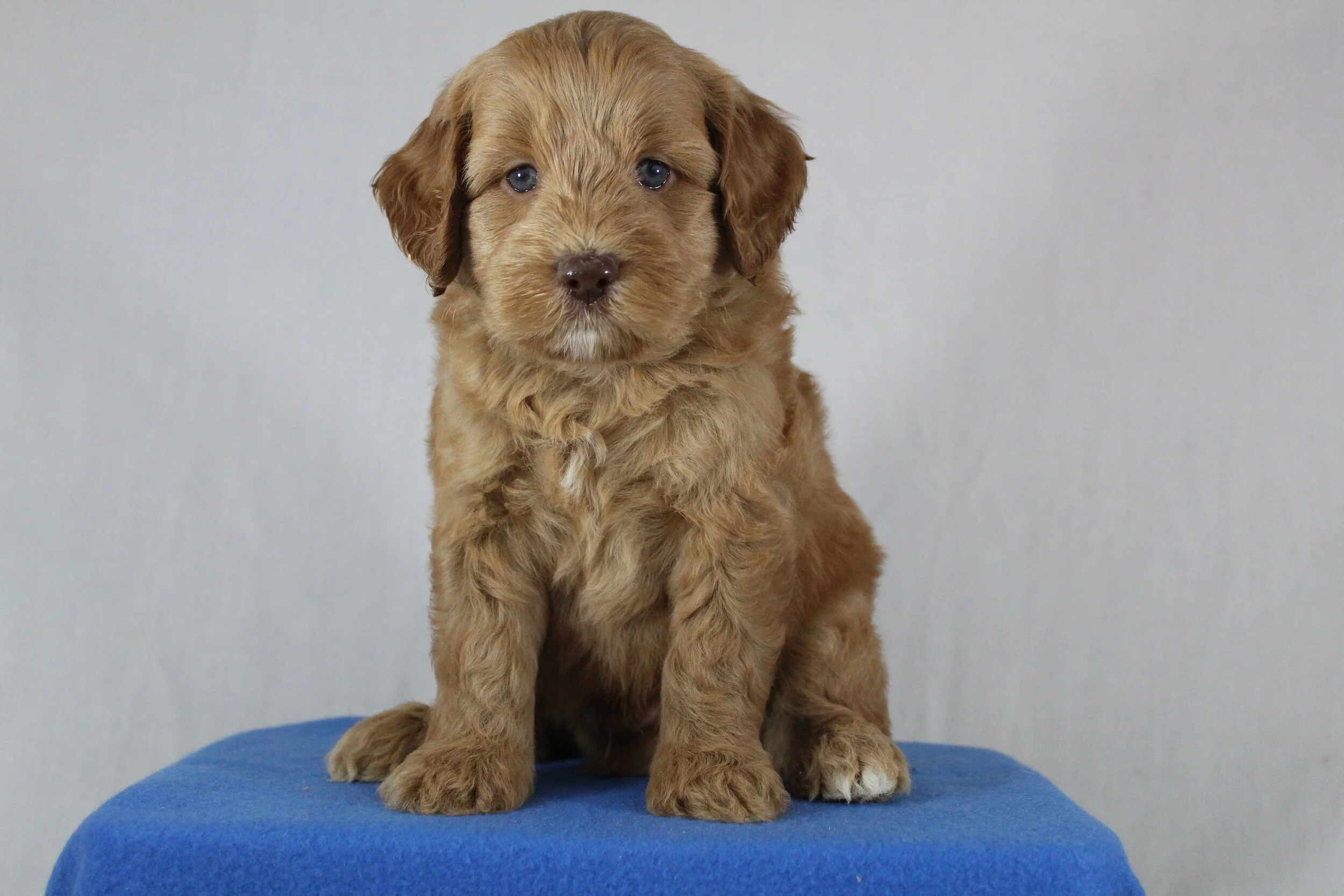
Dog Heat Cycle & Breeding Timeline: When Do Labradoodle Puppies Arrive?
Understanding a dog’s heat cycle and breeding timeline helps families know when to expect Labradoodle puppies. Learn how breeding timing works and how long it takes for puppies to go home.
Once you have placed a deposit on a future litter at Brown’s Labradoodles, the next question is often:
“What happens now?”
When we refer to a future litter, we are speaking about a planned breeding between carefully selected parents that has not yet occurred. Timing depends on the female entering her natural reproductive cycle, commonly known as the heat cycle.
Below is a clear explanation of how that process works.
What Is a Heat Cycle?
A female dog’s heat cycle is the period during which she becomes fertile and able to breed. The first visible sign is spotting — a small amount of blood discharge that signals the beginning of the cycle. This first day of spotting is considered Day 1.
While each female is slightly different, there is typically a short window during the cycle when breeding is most likely to be successful.
When Does Breeding Occur?
Most females become receptive to the male around Day 10–14 of the heat cycle, with many successful breedings occurring around Days 11, 12, and 14. However, exact timing can vary slightly depending on the individual female.
During this receptive period:
The female will “stand” for the male.
The male will show active interest in breeding.
When timing aligns correctly, breeding takes place within this window.
How Long Until Puppies Arrive?
Once breeding is successful, the gestation period is approximately 63 days.
From breeding to puppies going home typically looks like this:
~63 days pregnancy
8 weeks of raising and early development
Total timeline: roughly 120 days from breeding to puppies going home
This timeline can vary slightly but provides a realistic expectation for families awaiting a planned litter.
Why Planning Matters
Responsible breeding involves careful timing, health monitoring, and preparation well before puppies arrive. Because we prioritize thoughtful pairings and structured early development, future litter planning requires patience — but that patience ensures the best outcome for both puppies and families.
If you have reserved a future puppy and have questions about timing, we are always happy to provide updates and guidance along the way.

Any Puppies Yet? Understanding Future Litter Timing
One of the most common questions families ask after placing a deposit on a future litter is:
“Are there any puppies yet?”
While future litter planning allows families to reserve a place in advance, the exact timing of a litter can sometimes be difficult to predict. Understanding how breeding schedules work helps set realistic expectations during the waiting process.
Why Future Litters Are Projected — Not Guaranteed Dates
When families reserve a puppy from a future litter, they are placing a deposit on a planned pairing that has not yet occurred. Breeding schedules are typically estimated based on when a female was last in her heat cycle, but nature does not always follow a precise calendar.
A female dog may enter her heat cycle:
earlier than expected
later than expected
or exactly on schedule.
Even a variation of one or two months can significantly change the anticipated timeline for a litter.
Why Timing Cannot Be Forced
Unlike many aspects of planning, breeding cannot be rushed or controlled outside of the female’s natural cycle. Dogs breed only during a specific window within the heat cycle, and responsible breeders wait for this natural timing to ensure the best possible outcome.
While waiting can feel challenging for both breeders and families, this natural process helps support healthy pregnancies and successful litters.
Patience During the Process
We understand that families are excited and eager for updates. Waiting for a future litter requires patience, but it also reflects a commitment to thoughtful breeding rather than rushing timelines.
At Brown’s Labradoodles, we strive to keep families informed while respecting the natural rhythms that guide responsible breeding.
In the next article, we will explain the heat cycle in more detail and how it determines breeding timing.

Pixie’s Pups: When Plans Change and Beautiful Surprises Happen
Pixie recently welcomed her new litter — seven adorable, curly-coated puppies expected to mature into miniature-sized companions. Watching a litter arrive is always exciting, but this one came with a story that perfectly illustrates how breeding often requires flexibility and thoughtful decision-making.
When Plans Don’t Go Exactly as Expected
Breeding programs are built on careful planning, but nature does not always follow a schedule. The original plan was to pair Pixie with a beautiful red stud named Pacer from Springdale Labradoodles. However, during progesterone testing — which helps determine optimal breeding timing — we learned that Pixie had already ovulated, making it unlikely that the planned breeding would be successful.
Rather than moving forward with a pairing that had a low probability of success, we chose to adapt the plan responsibly.
A Thoughtful Adjustment
Instead, Pixie was introduced to Gus, our miniature Poodle. The timing aligned perfectly, and the breeding resulted in a beautiful litter of chocolate puppies.
While the outcome differed from the original vision, responsible breeding often involves making informed decisions in real time. Flexibility, experience, and careful observation help ensure the best possible result for both the mother and her puppies.
Seven Curly Little Companions
Pixie’s puppies are already showing promising traits, with curly coats and the charming personalities that make miniature-sized companions so special. Each litter reminds us that while planning is essential, sometimes the unexpected brings its own rewards.
At Brown’s Labradoodles, our goal is always to prioritize the health, wellbeing, and development of every puppy — even when the path to that outcome looks a little different than originally planned.

Breeding Dogs: The Rhythm of Time and the Journey of a Program
One of the most interesting aspects of breeding dogs is how time can feel both slow and incredibly fast at the same moment.
Since our last update at the end of March, many changes have taken place here at Brown’s Labradoodles. Several puppies have gone home to their forever families, and now we are entering another exciting season as we prepare for upcoming litters and future pairings.
Waiting for New Litters
Figgy and Hot Ticket are both approaching their due dates, and anticipation is building as we prepare to welcome their puppies. Not every breeding plan unfolds exactly as expected, however. Ellie underwent transcervical insemination, but despite our hopes, the pregnancy did not take. While disappointing for both us and the families waiting, this is a reminder that breeding remains guided by nature and cannot always be controlled.
Meanwhile, She’s Got the Look has recently entered her heat cycle and is expected to be ready for breeding with Hank soon — another exciting step forward for our program.
Understanding the Heat Cycle
Many people are unaware of how precise and limited the breeding window actually is. Female dogs typically enter a heat cycle approximately every six months. The cycle begins when spotting is observed, indicating that hormonal changes have started.
During this time:
The female releases pheromones that attract male dogs.
There is a narrow window — often between Days 9–13 — when breeding is most likely to be successful.
Outside of this short period, conception is unlikely.
Because of this natural timing, puppies cannot be produced on demand. Patience is an essential part of responsible breeding.
The Lifecycle of a Breeding Program
At Brown’s Labradoodles, each female is bred a limited number of times before retirement, typically four litters. This approach prioritizes the long-term health and wellbeing of our dogs.
This year, beloved dogs Muggins and Izzy will retire after completing their fourth litters. While it feels like they just joined our program, their journey has come full circle — a reminder of how quickly time passes in breeding.
As some dogs retire, others step into new roles. Kali, Bailey, Harriet, Zelda, Girtie, and others are preparing to become future mothers. We are also excited to welcome a new red male from Ashford Manor, expected to mature around 15–20 pounds, who will join Hank and Jax as part of our future breeding plans.
Looking Ahead
Breeding is both a science and an art — balancing planning with the unpredictability of nature. While timelines may shift, our commitment remains the same: producing healthy, well-balanced companions for families who love and cherish them.
We look forward to sharing updates as new litters arrive and continuing this journey with the families who make it all worthwhile.

“How Do You Let Them Go?” — The Emotional Side of Raising Puppies
One of the questions I am asked most often is:
“How do you let the puppies go?”
or
“Do you feel sad when they leave?”
My answer is usually simple:
“I love to see them come, and I love to see them go.”
The Beginning of Life
Watching puppies come into the world is something that never loses its impact. The intensity and beauty of birth — the moment a newborn puppy takes its first breath and begins its journey — is both powerful and humbling.
From that first moment, the mother instinctively knows what to do. She nurtures, cleans, and protects her puppies with remarkable precision. For the first few weeks, the puppies exist almost entirely under her care, their eyes and ears still closed as they grow and develop.
Then, slowly, everything begins to change.
Growth and Discovery
Around three weeks of age, eyes begin to open, hearing develops, and the world expands for the puppies. They move beyond the whelping area into spaces where they begin to explore, learn, and interact more intentionally.
This stage is filled with discovery:
learning to communicate
seeking human interaction
developing curiosity and personality.
It is one of the most rewarding parts of raising a litter — watching each puppy begin to show who they are.
The Natural Transition
By seven to eight weeks of age, a natural shift occurs. The mother begins to wean the puppies, and their independence becomes more apparent. Play becomes more energetic, personalities become stronger, and it becomes clear that they are ready for the next stage of life.
There comes a moment when you know you have done everything you can to prepare them — and now they need families of their own.
No breeder can provide the individual attention and lifelong commitment that a dedicated family can give. Watching families arrive with excitement and love already prepared for their new companion makes the transition meaningful and fulfilling.
Loving the Entire Journey
There is joy in welcoming puppies into the world and equal joy in seeing them leave for homes where they will be cherished.
The puppy room gets cleaned, preparations begin again, and the cycle continues — each litter bringing new experiences and new families connected by the same love for these remarkable dogs.
I truly do love to see them come — and I love to see them go.

The Pups Are Growing!
One of the most rewarding parts of raising a litter is watching how quickly everything changes.
In the earliest days, puppies are tiny and quiet — eyes closed, ears sealed, focused only on nursing and sleeping. They barely resemble the playful companions they will soon become. At that stage, they almost look like little mice, completely dependent on their mother for everything.
Then, almost overnight, something shifts.
The Rapid Transformation
Within a matter of days:
Eyes begin to open
Hearing develops
Movement becomes more coordinated
Personalities start to emerge
What was once a calm whelping area suddenly becomes lively and animated. Puppies begin interacting with one another, exploring their space, and showing the first glimpses of curiosity and playfulness.
It happens so quickly that you sometimes pause and wonder how it all changed in what feels like a moment.
The Joy of Watching Them Grow
This stage is filled with energy and discovery. Puppies begin testing their legs, discovering toys, engaging with their littermates, and responding more intentionally to human interaction.
Every litter goes through this transformation, but it never stops being fascinating to witness.
Below are a couple of short videos capturing some of these early growth moments.

The pups are growing!
One of the most rewarding parts of raising a litter is watching how quickly everything changes.
In the earliest days, puppies are tiny and quiet — eyes closed, ears sealed, focused only on nursing and sleeping. They barely resemble the playful companions they will soon become. At that stage, they almost look like little mice, completely dependent on their mother for everything.
Then, almost overnight, something shifts.
The Rapid Transformation
Within a matter of days:
Eyes begin to open
Hearing develops
Movement becomes more coordinated
Personalities start to emerge
What was once a calm whelping area suddenly becomes lively and animated. Puppies begin interacting with one another, exploring their space, and showing the first glimpses of curiosity and playfulness.
It happens so quickly that you sometimes pause and wonder how it all changed in what feels like a moment.
The Joy of Watching Them Grow
This stage is filled with energy and discovery. Puppies begin testing their legs, discovering toys, engaging with their littermates, and responding more intentionally to human interaction.
Every litter goes through this transformation, but it never stops being fascinating to witness.
Below are a couple of short videos capturing some of these early growth moments.
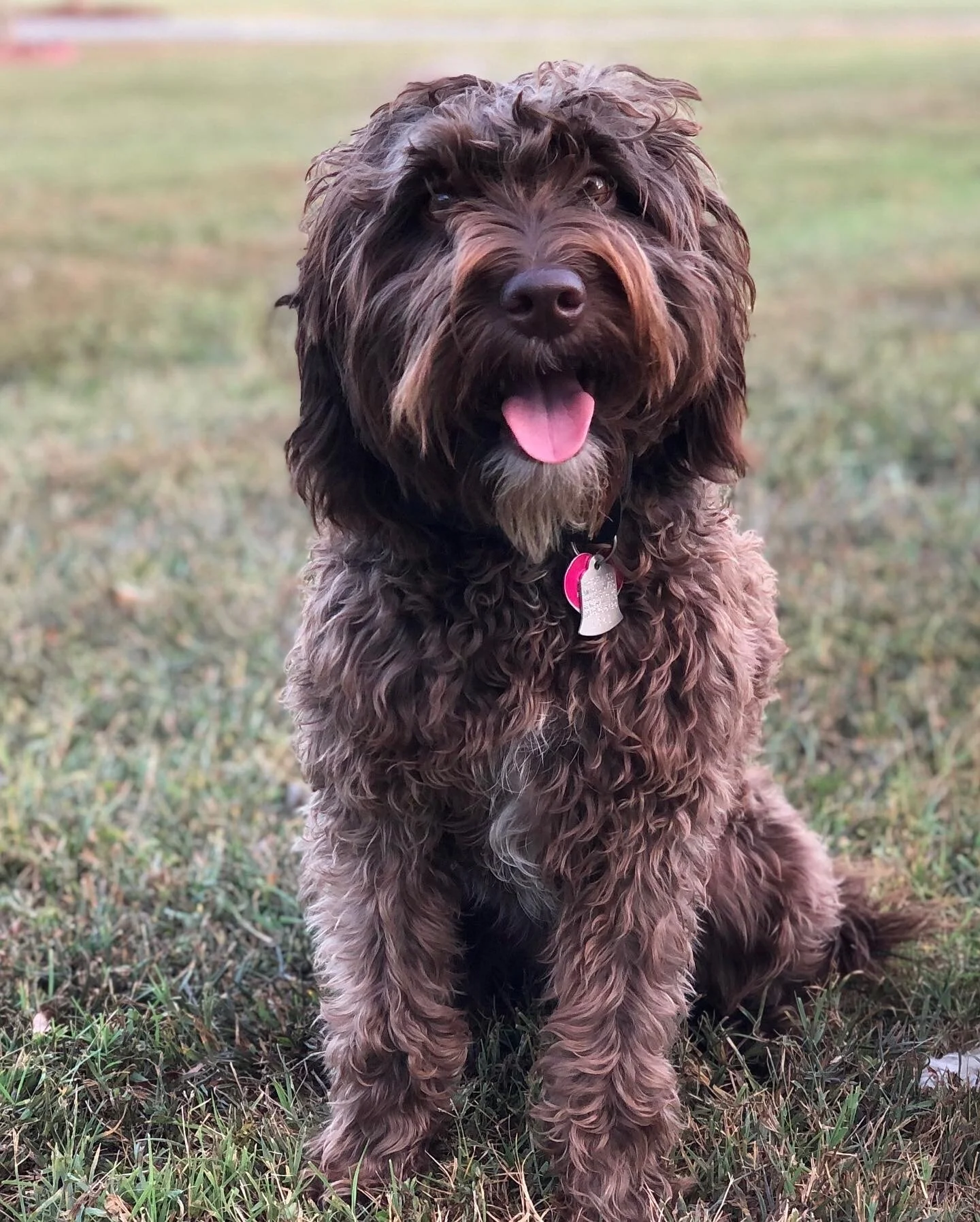
Is There Really Such a Thing as a “Calm Puppy”?
I recently came across a discussion about finding a “calm puppy,” and it made me pause for a moment.
In reality, there is no such thing as a truly calm puppy.
If you’re hoping for a young puppy that will quietly lie on the floor, go outside on command, avoid chewing, and never bark — you may be in for a surprise.
Puppies are not calm any more than young children are calm. Asking a 7-year-old to sit quietly and never test boundaries is about the same as asking that of a young dog. There are moments of stillness, of course — but they are just that: moments.
What Breeders Mean by “Calm”
Now, I have described puppies as “calm” before. But what I mean — and what a new owner may hear — can be very different things.
When I say a puppy is calm, I’m speaking comparatively. I’m referencing other litters, other energy levels, and experience over time. I have a framework in mind.
A new owner may not.
What a breeder considers “calm” might still feel energetic, busy, and demanding to someone who hasn’t raised a puppy recently — or ever.
Expectation matters.
The Natural Stages of Development
Australian Labradoodles are wonderful companions. They are affectionate, intelligent, and people-focused. But they are still dogs — and young dogs at that.
Puppyhood leads to adolescence.
Adolescence leads to testing boundaries.
Around two years of age, maturity begins to settle in. Much of the impulsive puppy behavior fades with consistent training and structure.
Calmness is far more a product of age, leadership, and training than personality alone.
What Actually Matters When Choosing a Puppy
If you are considering adding a puppy to your home, it’s important to recognize that you are committing to a multi-year journey. The goal isn’t to eliminate all challenges — that isn’t realistic — but to reduce unnecessary ones.
Here are three ways to do that:
1️⃣ Choose Health-Tested Parents
Responsible breeders conduct health certifications on breeding dogs to evaluate structural soundness and reduce breed-specific risks. This proactive approach helps improve long-term outcomes for puppies.
2️⃣ Choose Genetic Testing
Genetic testing identifies whether a parent dog carries specific inherited conditions. A dog can carry a recessive trait without being affected, but pairing two carriers can produce affected puppies. Proper testing prevents avoidable genetic disease.
3️⃣ Commit to Training and Exercise
A bored puppy becomes a destructive puppy. Structure, training, and exercise create freedom. Dogs that are trained and mentally stimulated are given far more opportunity and trust than those without guidance.
Healthy dogs are the result of thoughtful breeding, consistent training, and time.
The Honest Truth
If you’re looking for a perfectly calm puppy, you may want to consider an adult dog.
If you’re ready for growth, energy, boundaries, laughter, frustration, learning, and eventually deep companionship — then you’re ready for a puppy.
And that journey, while demanding, is worth it.

Ask Me Anything: A Place for Labradoodle Questions and Community
Hello Labradoodle lovers!
One of the things I enjoy most about breeding is the relationships that continue long after puppies go home. Over time, I’ve realized there should be a place where families can ask questions, share experiences, and stay connected — not only with me, but with each other.
This space is meant to do exactly that.
Whether you are a current puppy owner, someone waiting on a future litter, or simply interested in learning more about Australian Labradoodles, you are welcome here.